How Hà Giang Place Names Shape Casino Stories
See how Hà Giang place names shape casino stories, sharpen a work’s sense of movement and identity, and help readers notice an artist’s visual choices.
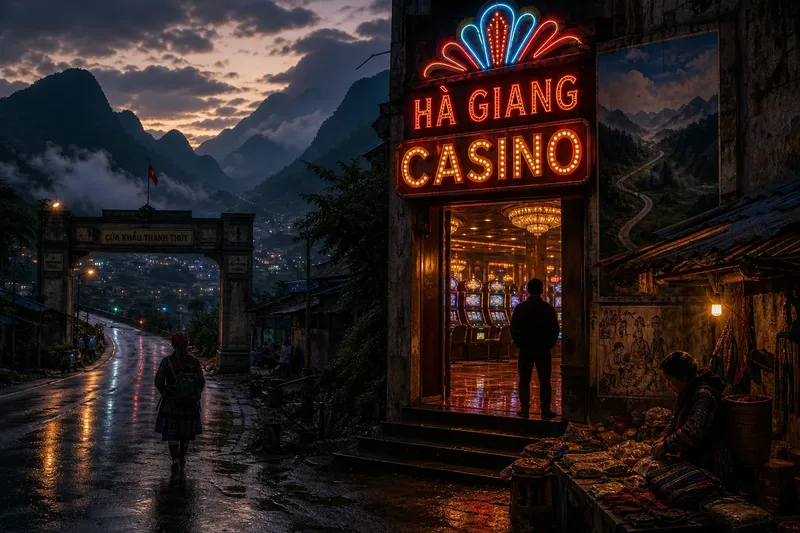
What does a Hà Giang place name make you see when it appears in a casino story? A name can turn a painted doorway, a line of dialogue or a map in the background into a charged point of arrival, without telling you where a venue is or who belongs there.
In art about casino culture, names work as creative material: they can set a rhythm, suggest a borderland journey or place one speaker’s viewpoint beside another’s. Read them alongside the image and the work’s language, attending to how the name frames a scene rather than treating it as a pin on a verified map.
Names as composition
An artist may let a place name do visual work. On a poster, it might sit in oversized lettering above a small doorway; in a painting, it might appear on a sign partly obscured by rain. Size, position, colour and legibility influence what draws the eye before the scene is fully understood.
Notice whether Hà Giang appears as a title, a spoken word, a hand-written label or a background detail. Each choice gives the name a different role: a title can announce a setting, while a fragment on a wall may feel like a memory surfacing inside the picture.
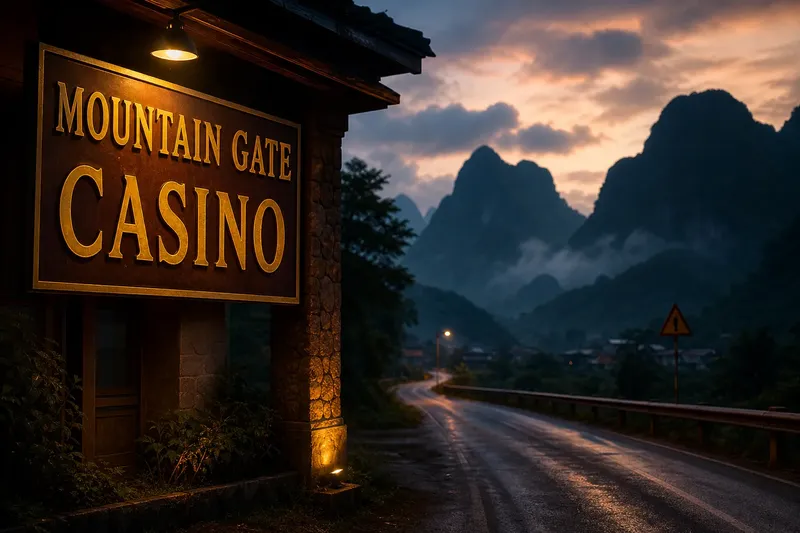
That effect belongs to the work’s design. A casino sign borrowing a mountain, town or pass name may create a particular mood, but it does not by itself identify a real venue or describe a local relationship.
Borderland imagery
Borderland histories often enter art through suggestion rather than a neat timeline. A road vanishing behind a ridge, a gate at the edge of a frame or a figure looking beyond the viewer can evoke passage, watchfulness or separation. These motifs invite interpretation; they do not establish a specific historical event.
Ask what the image puts in the foreground. If the casino sign dominates while people and everyday surroundings recede, the work may be using the place name as an emblem. If several voices, objects or routes share the scene, the composition may resist reducing the setting to a single symbol.
Keep the distinction visible in your description: “the painting evokes a border crossing” describes an effect, while “the painting depicts a documented crossing” makes a factual claim that needs support beyond visual resemblance.
Language in the frame
Look at how names are written and spoken. Diacritics, transliteration, an untranslated phrase or a deliberate change of spelling can make language itself part of the artwork’s subject. Do not infer a name’s meaning from its sound; use an explanation only when the work attributes it clearly or a suitable language source supports it.
Captions and dialogue can also reveal who gets to name a place. A narrator may call somewhere “remote”, while another character refers to it as home or as a familiar route. That contrast can expose the distance between an outsider’s description and a person’s lived perspective, without proving what any real community thinks.
In a gallery note or review, preserve the distinction between a character’s words and the artist’s claim. “The narrator calls the town forgotten” is more precise than presenting “forgotten” as a settled description of the place.
Reading a visual scene?
What does a place name add to a casino image?
It can give a scene a sense of direction, memory or imagined belonging. The surrounding colours, lettering and figures help show whether the name anchors the composition or functions more like an emblem.
Does a border motif document history?
Not on its own. A gate, road or ridge can evoke borderland experience, but a claim about a particular event needs evidence appropriate to that claim.
How should I read unfamiliar spelling?
Record the form exactly as the artwork presents it, including its diacritics where visible. If another source uses a different form, describe the variation rather than silently correcting the artwork or assigning a meaning you cannot support.
Can a casino name refer to a real place?
It can, but the name alone does not show that the venue is there. Treat the connection as part of the work’s imagery unless the work supplies a separate, clear basis for a factual location claim.
A close reading
Imagine an invented collage titled Cloud Gate, Hà Giang: its centre shows a bright casino sign, while a narrow road and a half-hidden market stall occupy the edges. The caption calls the venue “a doorway to the border”, but gives no address or historical source.
First, note the title’s two place references as the collage presents them; do not turn them into a venue address. Next, describe the composition: the sign commands attention, while the road and stall remain partial. Then read “doorway to the border” as the caption’s metaphor, not a documented account of the depicted location.
The resulting interpretation is specific without overreaching: the collage makes the casino name feel prominent and uses the road to suggest passage, while leaving the venue’s real-world location unresolved. The trade-off is useful: you can discuss the work’s atmosphere and visual hierarchy without assigning its imagined scene to a real community.
Make a careful note
Use this set of observations when writing about a casino artwork’s place names. Each item links what you can see or read to a next decision, so interpretation stays tied to the work.
- Title: Check whether Hà Giang appears in the title; if it does, describe it as the work’s stated frame, then look for further location detail, and if it does not, avoid adding the province as a setting without another cue.
- Lettering: Check whether a casino name appears on a sign, caption or prop; if its role is clear, describe that visual role, and if it is ambiguous, call it a possible venue name rather than a confirmed establishment.
- Place type: Check whether the work identifies a town, road, pass or broader region; if the type is explicit, name that level, and if it is not, keep your description general instead of guessing.
- Spelling: Check the artwork’s exact spelling and diacritics; if a map or caption uses another form, record both with their sources, and if the discrepancy remains unexplained, leave it unresolved.
- Border motif: Check for a gate, road, ridge or other threshold image; if it shapes the scene, describe the effect as an artistic suggestion, and if it does not, do not impose a border-crossing interpretation.
- Point of view: Check who speaks or supplies a caption; if the wording belongs to a character, attribute it to that character, and if the speaker is unclear, describe the wording without assigning it to a community.
- Historical claim: Check whether the work asserts a specific event; if it provides a clear source, report that attribution accurately, and if it does not, discuss the image as evocation rather than documentation.
These choices make a review more vivid, not less. The reader can see what the artist has put before them and where interpretation begins.
Describe the effect
For a compact note, name the place reference, identify where it appears and explain what it does in the composition. A sentence such as “The Hà Giang reference sits above the casino sign, making the imagined venue feel tied to a larger journey, while the collage gives no address” offers both a visual reading and a clear boundary.
Hà Giang place names in casino art can carry movement, memory and viewpoint through a few letters on a wall or a title at the edge of a page. Attend to their visual and linguistic role, and the work’s imaginative geography comes into focus without mistaking it for a map.