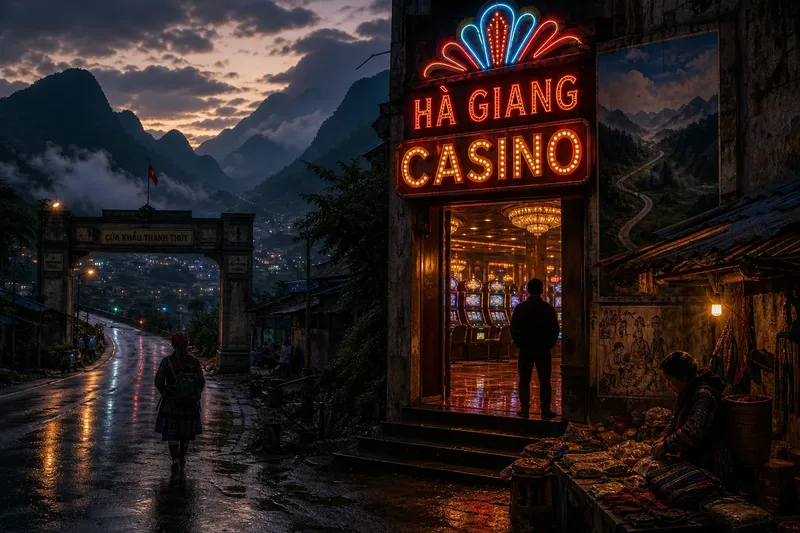
Reading Casino Imagery in Hà Giang Fiction
Casino imagery in Hà Giang fiction can reveal how artists build mood through colour, objects and framing, while helping readers separate fiction from fact.
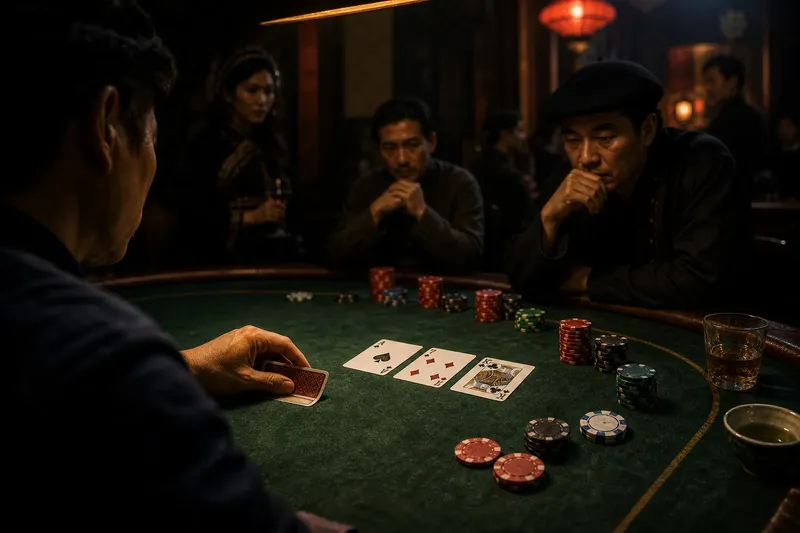
What is a casino image in Hà Giang fiction asking you to notice first: the green felt, a guarded expression, or the flash of a playing card? Casino imagery in Hà Giang fiction can work like visual shorthand, turning a few objects and gestures into a scene of suspense, performance or uncertainty.
Objects in focus
Start with what the image actually shows. A chip, a deck, a glass or a hand poised above the table can direct attention more sharply than the room around it.
Notice whether an object is prominent, repeated or pushed to the edge. A stack of chips in the foreground might make calculation feel central; a discarded card near the frame could instead suggest a moment already past. These are readings of composition, not claims about actual gambling practice.
Colour and light
Colour can set the scene’s emotional temperature. Red may intensify a moment, while cool blue light can make faces seem distant; neither colour carries a fixed meaning on its own.
Look at where the light falls and what it leaves in shadow. A sharply lit hand beside a dim face may make an action more legible than the person taking it, while an evenly lit table can make the room feel exposed. Describe the contrast before assigning it a meaning.
Faces and gestures
Small gestures often carry the scene’s tension: a player holding a card close, a dealer’s open palm, or a spectator leaning forward. Ask what the body language lets the viewer know and what remains unreadable.
Expressions can also resist a simple interpretation. A still face might signal concentration, fatigue or deliberate concealment. Unless the work makes a character’s feelings explicit, frame your reading as a possibility rather than a fact.
What should you look for?
Why show the cards?
Visible cards can clarify what is at stake in the composition, or draw attention away from the players. Check which cards are legible and who can see them; if the image hides their faces, discuss concealment, but if they are clearly displayed, describe how their visibility guides the viewer.
What does a crowded table do?
A crowded table can make the scene feel compressed, competitive or sociable. If bodies overlap, describe the pressure created by the framing; if each person has clear space, consider how the composition separates them instead.
How can sound appear in a still image?
Artists can suggest noise through open mouths, turned heads or a scattered arrangement of objects. If these cues are present, explain how they imply activity; if they are absent, avoid inventing a soundscape the image does not provide.
How do captions affect interpretation?
A caption may identify a character, place or moment, but it can also steer the viewer towards a particular reading. If the caption names its source or context, use that information carefully; if it does not, separate the caption’s wording from what the image itself shows.
Composition choices
Framing decides what the viewer can inspect. A close crop may isolate fingers and cards, while a wider view can include the room’s architecture, other players or an exit. Neither view is automatically more truthful; each selects different evidence within the artwork.
Consider the direction of the gaze, too. If several characters look towards one person, the composition gathers attention around them. If their eyes point in different directions, the scene may feel divided, with no single centre of control.
A worked reading
Imagine an invented illustration set in a fictional casino scene associated with Hà Giang. Its starting details are a green table, three visible cards, one player’s hand covering a fourth card, and a caption that names no real venue.
First, note the three exposed cards and record that the fourth is concealed; the observable result is a contrast between disclosure and uncertainty. Next, follow the light: it falls on the cards but leaves the player’s face dim, so the image makes the game’s objects clearer than the player’s expression. Then check the caption; because it names no venue, the decision is to describe the setting as fictional rather than identify a real casino. The resulting reading is that the illustration builds suspense through selective visibility, without establishing anything about local gambling or a particular place.
Useful viewing decisions
- Check whether cards are visible; if their faces can be read, describe how that information directs attention, but if they are obscured, discuss concealment rather than guessing their value.
- Check which object occupies the foreground; if it is a chip or card, explain its visual prominence, but if no object stands out, describe the scene as more evenly distributed.
- Check where the brightest light falls; if it isolates a person or object, connect that contrast to the viewer’s focus, but if the lighting is even, do not claim a spotlight effect.
- Check whether faces show clear expressions; if an expression is legible, describe the visible features, but if it is ambiguous, offer more than one possible reading or leave the emotion unsettled.
- Check how many figures the frame includes; if bodies overlap, describe the crowded composition, but if space separates them, note that visual distance instead.
- Check whether a caption identifies a real venue; if it supplies a verifiable name, keep the attribution distinct from interpretation, but if it does not, call the setting fictional or unidentified.
For a precise account of casino imagery in Hà Giang fiction, name the visible choices—light, hands, cards and framing—before explaining their effect. That simple order keeps the interpretation vivid while leaving real places and their histories to evidence suited to those subjects.