Memory in the Frame: Archive Images or Present-Day Views?
Compare archive images and present-day views of Casino, Hà Giang, to show what changed, choose precise captions and shape a more thoughtful visual story.
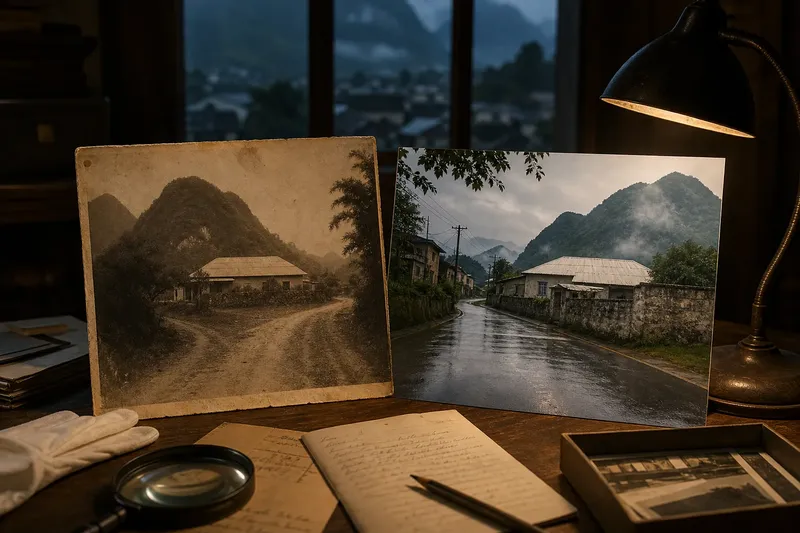
Which picture should lead a story about Casino, Hà Giang: an archival image or a view made today? Archive images of Casino can carry the mood of an earlier moment, while a new photograph shows what the camera can see now. Put them together and the choice becomes an artistic one as much as a record of place.
Images as material
In an artwork, an old photograph is not merely a window onto the past. Its grain, faded edges, handwriting and marks of handling can become part of the composition, while a crisp contemporary image brings a different visual texture.
Consider what each frame does to the viewer’s attention. A road entering the old image from one corner may pull the eye towards a building; in a new image, the same direction might lead towards a busy or altered foreground. These are compositional facts to explore, not proof of how the place changed.
Build a visual pairing
Before setting two pictures side by side, decide what kind of relationship the artwork should suggest. A matched viewpoint invites comparison; a crop, overlay or deliberate gap can make the connection feel incomplete or remembered rather than exact.
- Shared landmark: If a wall, roof or bend in the road is identifiable in both images, align that feature; if not, present the pictures as separate views rather than a matched pair.
- Different framing: If one photograph includes more surrounding space, keep the full frame or disclose the crop; if the crop hides useful context, use the uncropped version instead.
- Contrasting textures: If the old print has visible grain or damage, preserve it as part of the image; if digital cleanup removes those marks, keep an untouched copy and make the alteration clear.
- Unclear chronology: If a date is supported by a collection record or contributor, include its attribution; if not, label the image’s date unknown rather than implying a sequence.
- Visible text: If a sign or handwritten note is legible, reproduce only what can be read; if it is uncertain, mark the reading as unclear rather than completing it by guesswork.
- Recognisable people: If someone can be identified and the image will be shared publicly, check permission and context; if consent is unclear, choose a non-identifying crop or leave the image out.
Imagine you are assembling a small gallery panel with a hypothetical archival print labelled “Casino, date unknown” and a new photograph taken from a nearby public path. You notice that both frames include a pale roof, but the old print shows a narrow track while the new one shows a paved surface; you place the images apart, retain their full frames and caption the roof as a visual point of comparison. The result invites viewers to notice the contrast without claiming that the camera positions match or that the pictures establish when the surface changed.
Captions that frame
A caption can steer a viewer towards a particular story, so distinguish what the image visibly contains from the information attached to it. “Pale roof beside a track” describes the frame; “former trading post” makes a historical claim that needs a source.
For an artwork involving Casino’s names or borderland histories, ask what a visual pairing can contribute without asking it to stand in for local speech. A place-name may carry different associations for different people; an image can prompt questions, but it cannot settle those meanings.
Choosing a visual form?
Should I pair images side by side?
Side-by-side placement makes differences in framing and visible details easy to notice. Use it when the connection is supportable, and label dates or viewpoints that remain uncertain.
Can I crop an archival photograph?
You can crop an image for composition, but retain an unaltered copy and make the crop apparent when it removes context. If the missing edges matter to the artwork’s claim, show the full image instead.
How should I handle an uncertain caption?
Attribute the wording to the person, collection or record that supplied it, if known. If the source is unclear, describe the visible content and leave the historical identification open.
Can a visual story include local memory?
It can, with care: identify recollections as testimony and agree how a contributor wishes their words or image to appear. For a place name’s meaning, let relevant local voices and records inform the interpretation rather than asking a photograph to decide it.
Make the uncertainty visible
Uncertainty need not weaken an image-led story. A gap between frames, a caption that says “date unknown”, or a visible note about an attributed location can make the limits of the material part of the artwork’s form.
For archive images of Casino, Hà Giang, a useful final choice is often the least theatrical one: preserve the source image, identify any edits, and say exactly what viewers can compare. That leaves space for the work to evoke memory without turning visual resemblance into a claim about history.